Mega Religious Events Branding: How Brands Can Reach Millions Through Religious Gatherings
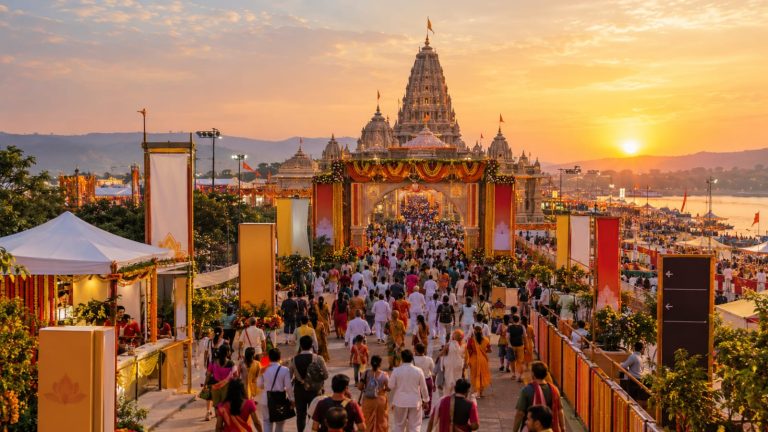
India’s religious festivals and pilgrimage events bring together millions of people from different cities, communities, and backgrounds. For brands looking to build awareness, increase visibility, and connect with consumers at scale, these gatherings provide a powerful opportunity for mega religious events branding.
From Ganapati celebrations and Navratri to Kumbh Mela, Rath Yatra, Pandharpur Wari, Chhath Puja, and Gurupurabs, brands can create meaningful physical touchpoints where people gather in large numbers.
Fateh Rural provides end-to-end religious event branding solutions designed to help brands create visibility and engagement at major religious gatherings across India.
What Is Mega Religious Events Branding?
Mega religious events branding is an on-ground marketing strategy in which brands use high-footfall religious events and pilgrimage routes to communicate with large audiences.
Instead of relying only on television, digital advertising, or traditional media, brands become physically visible where consumers are already present.
Depending on the event and campaign objective, branding can include:
Hoardings
Entry gates
Information boards
Police barricading
Police booth branding
Clock tower branding
Changing-room branding
Activation zones
Product sampling
Promotional stalls
LED and promotional vans
Customized event branding
These formats can be combined to create a complete event-level brand presence.
Major Religious Events Where Branding Works
Religious events differ in audience, geography, duration, and scale. Choosing the right event is therefore important for campaign success.
1. Ganapati Festivals
Ganapati celebrations attract large crowds around community pandals and public celebrations. Brands can use pandal branding, entry gates, hoardings, information boards, stalls, and activation zones to create visibility.
2. Navratri
Navratri provides opportunities to reach consumers during large-scale Garba, Durga Puja, and community celebrations. Brands can create attractive visual installations, stalls, sampling activities, and event-specific experiences.
3. Kumbh Mela
Kumbh Mela is one of the world’s largest religious gatherings. Its enormous footfall makes it suitable for brands looking for large-scale visibility and nationwide awareness. Strategic placement is especially important because of the size and complexity of the event.
4. Pandharpur Wari
Pandharpur Wari provides an opportunity to connect with pilgrims travelling along a major religious route. Mobile branding, roadside visibility, information boards, and van activations can help brands maintain visibility along the journey.
5. Rath Yatra
Rath Yatra creates opportunities for street-level branding along procession routes and surrounding high-footfall areas.
6. Chhath Puja
Chhath Puja brings large crowds to river ghats and surrounding locations, particularly across North and East India. Brands can use suitable outdoor branding and activation formats around permitted areas.
7. Gurupurabs
Gurupurab celebrations and Nagar Kirtans can provide opportunities for brands to build visibility through appropriate event and community touchpoints.
Fateh Rural also offers customized solutions for regional fairs and local religious festivals.
Benefits of Mega Religious Events Branding
1. Large-Scale Brand Visibility
Religious gatherings attract significant crowds, giving brands an opportunity to achieve high physical visibility within a relatively concentrated period.
Strategically placed hoardings, entry gates, banners, barricades, and other branding assets can keep the brand visible throughout the consumer journey.
2. Direct Consumer Engagement
Unlike passive advertising, activation zones and stalls allow brands to interact directly with consumers.
Brands can use these spaces for:
Product demonstrations
Sampling
Consumer interaction
Lead generation
Brand education
Promotional activities
This makes religious event branding useful for both awareness and engagement campaigns.
3. Strong Local and Regional Connect
Religious events are deeply connected with local culture and communities. A well-planned campaign can use regional languages, culturally relevant creatives, and local communication styles to make the brand message more relatable.
4. Multiple Consumer Touchpoints
A campaign does not have to depend on a single advertising format.
For example, a brand can combine:
Entry Gate → Hoarding → Barricading → Activation Zone → Product Sampling → Van Activation
This creates repeated exposure throughout the consumer journey.
5. Rural and Urban Reach
Many mega religious events attract audiences from both rural and urban areas. This makes them particularly useful for brands that want to expand beyond major cities and reach consumers across different market segments.
6. Brand Recall
Repeated physical exposure during a high-attention event can help consumers remember the brand. Consistent branding across multiple locations can further strengthen visibility.
Where Does Religious Event Branding Work Best?
Location selection is one of the most important parts of a religious event campaign.
Branding opportunities can include:
Event Entrances
Entry gates and welcome areas provide high visibility because attendees naturally pass through these locations.
Main Roads
Hoardings and roadside branding can communicate with people travelling toward the event.
Parking Areas
Parking zones can provide additional high-visibility touchpoints.
Crowd and Queue Routes
Police barricading and route branding can provide continuous visibility while people move through the event.
Food Courts and Central Areas
Clock towers and other prominent structures can be used for landmark visibility where permitted.
Help Desks and Information Points
Information boards and police booth branding can combine utility with brand visibility.
Activation Zones
Dedicated activation areas are ideal for product sampling, demonstrations, games, contests, and direct consumer interaction.
Pilgrimage Routes
For long-distance religious journeys such as Pandharpur Wari, mobile and roadside branding can help brands remain visible across multiple locations.
When Should You Use Religious Event Marketing?
Mega religious event branding can be particularly effective when a brand wants to achieve one or more of the following objectives.
For New Product Launches
If you are launching a product in a new market, religious events can provide a large audience for awareness and product introduction.
For Brand Awareness Campaigns
Brands entering a new state, region, or consumer segment can use religious events to increase physical visibility.
For Product Sampling
FMCG, food, beverage, personal care, healthcare, and other suitable categories can use activation zones for sampling and demonstrations, subject to event permissions.
For Rural Market Expansion
Brands targeting rural and semi-urban consumers can use major religious gatherings to reach audiences beyond conventional urban advertising channels.
During Seasonal Campaigns
Religious festivals often have strong seasonal relevance. Campaigns planned around the festival calendar can create timely brand communication.
For Regional Market Penetration
Brands expanding into a specific state or region can select religious events that attract their target audience.
Types of Marketing Campaigns You Can Run
1. Brand Awareness Campaign
Use hoardings, entry gates, barricades, and other high-visibility formats to maximize brand exposure.
2. Product Sampling Campaign
Set up permitted activation zones where consumers can experience or sample the product.
3. Product Demonstration Campaign
Demonstrate how a product works and allow consumers to interact with it.
4. Lead Generation Campaign
Use registration counters, QR codes, forms, or assisted interactions to generate potential customer leads.
5. Promotional Campaign
Use contests, offers, coupons, giveaways, or other suitable promotional mechanisms to encourage interaction.
6. Mobile Van Activation
LED and promotional vans can take the campaign message to multiple locations around an event or along relevant routes, subject to local permissions.
7. Integrated Event Campaign
For maximum impact, brands can combine outdoor branding, activation, sampling, mobile vans, and event-specific communication into one integrated campaign.
How to Plan a Successful Religious Event Branding Campaign
A successful campaign requires more than simply putting a logo at an event. The campaign should be planned around the audience, event, geography, and brand objective.
Step 1: Select the Right Event
Identify events based on audience profile, geography, scale, and relevance to the brand.
Step 2: Define the Campaign Objective
Decide whether the primary objective is awareness, product launch, sampling, lead generation, sales support, or consumer engagement.
Step 3: Select Branding Locations
Identify high-footfall areas such as entrances, roads, parking zones, crowd routes, and activation spaces.
Step 4: Create Event-Friendly Creatives
Brand communication should be simple, highly visible, culturally appropriate, and easy to understand in a crowded environment.
Step 5: Manage Production and Logistics
Outdoor religious events require durable branding materials, transportation, manpower, installation, and timely execution.
Step 6: Coordinate Permissions
Large religious events involve multiple stakeholders and authorities. Permissions and logistical coordination should be planned in advance.
Step 7: Monitor the Campaign
Regular monitoring helps ensure that branding assets remain properly installed and visible throughout the campaign.
Step 8: Measure the Impact
Post-event reporting can include photographs, execution reports, activation data, consumer interactions, leads, and other relevant campaign metrics.
Fateh Rural’s stated workflow includes event selection, strategic planning, design and production, resource planning, permissions coordination, activation, monitoring, and post-event impact reporting.
Why Choose Professional Religious Event Branding Services?
Managing a campaign at a mega religious event can involve multiple locations, vendors, permissions, production requirements, transportation, installation teams, and on-ground monitoring.
A professional agency can coordinate these activities under one campaign strategy.
Fateh Rural positions its religious event offering as an end-to-end solution covering major events across India, with customized branding formats and execution support.
Conclusion
Mega religious events branding gives brands an opportunity to move beyond traditional advertising and become part of the physical environment where millions of consumers gather.
Whether the objective is brand awareness, product sampling, regional expansion, lead generation, or direct consumer engagement, the right combination of hoardings, entry gates, barricading, activation zones, information boards, stalls, and mobile branding can create multiple consumer touchpoints.
The key is to choose the right event, understand the audience, select strategic locations, create culturally relevant communication, and execute the campaign professionally.
With the right planning and on-ground execution, religious events can become powerful platforms for building brand visibility, consumer engagement, and long-term market presence.