
Film and Audio Production: Powerful Content for Modern Marketing Campaigns
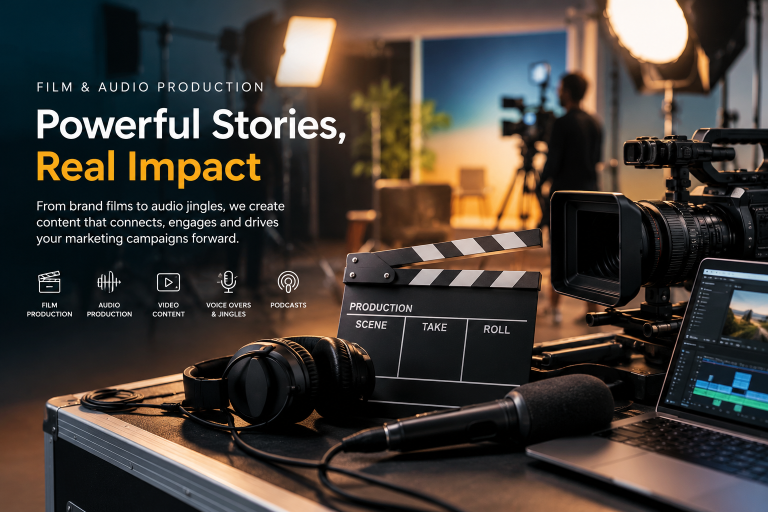
In today’s digital-first world, brands need more than just posters, banners, and written advertisements to capture attention. Film and audio production helps businesses communicate their products, services, stories, and brand identity through engaging visual and audio content.
From television commercials and product films to corporate videos, documentaries, social media videos, audio jingles, podcasts, and voice-over content, professional production can become an important part of a successful marketing campaign.
Video combines visuals, sound, storytelling, and emotion, making it a versatile marketing asset that can be distributed across websites, social media, advertising platforms, presentations, television, and other channels.
What Is Film and Audio Production?
Film and audio production is the process of planning, creating, recording, editing, and delivering professional visual and audio content for businesses, organizations, brands, and campaigns.
Depending on the campaign objective, production may include:
TV commercials and advertising films
Product films
Company profile films
Brand films
Documentary films
Social media videos
Promotional videos
AI-powered films
Audio jingles
Voice-over production
Podcasts
Campaign music and sound production
Celebrity-led advertising content
The production process generally involves concept development, scripting, pre-production, shooting or recording, editing, sound design, colour correction, voice-over, graphics, and final delivery.
Benefits of Film and Audio Production for Businesses
1. Builds Strong Brand Awareness
A professionally produced film can communicate your brand identity, values, products, and message in a memorable way. Consistent visual storytelling can help audiences recognize and remember your brand.
2. Creates Better Audience Engagement
Videos combine movement, sound, visuals, and storytelling. This makes it easier to capture attention and communicate messages compared with relying only on static content.
3. Explains Products and Services Clearly
Some products and services are difficult to explain through text alone. Product demonstrations, explainer videos, company films, and visual storytelling can make complicated information easier to understand.
4. Supports Multiple Marketing Channels
One professionally produced film can be adapted into multiple formats. For example, a long brand film can be converted into shorter social media videos, Reels, advertisements, website content, and presentation material.
5. Helps Build Customer Trust
Professional production can present a business, its people, products, facilities, and processes in an authentic and polished manner. This can help create a stronger impression among potential customers and business partners.
6. Strengthens Advertising Campaigns
A strong commercial film can become the central creative asset of an advertising campaign. Shorter versions can then be used across digital advertising, social media, websites, and other marketing channels.
7. Makes Your Brand More Memorable
Storytelling gives brands an opportunity to communicate emotions, experiences, and ideas instead of simply listing product features. This can help create stronger connections with audiences.
8. Creates Reusable Marketing Assets
A well-planned production can generate multiple assets from a single shoot, including photographs, short videos, interviews, testimonials, social media clips, and promotional content.
Where Does Film and Audio Production Work Best?
Film and audio production can be used across many industries and marketing environments.
1. Television Advertising
TV commercials are useful for brands targeting large audiences and looking to build broad awareness. A professionally produced TV commercial can communicate the brand message through a combination of storytelling, visuals, music, and voice-over.
2. Social Media Marketing
Instagram, Facebook, YouTube, LinkedIn, and other platforms provide opportunities for businesses to use short-form and long-form video content.
Brands can create:
Reels
Short promotional videos
Product demonstrations
Behind-the-scenes videos
Founder videos
Customer testimonials
Campaign videos
Educational videos
3. Product Launch Campaigns
When launching a new product, video can demonstrate its features, benefits, usage, and unique selling points.
A product launch campaign can include a hero film, product demonstration, short social media edits, influencer content, and digital advertisements.
4. Corporate Branding
Companies can use corporate films and company profile videos to introduce their business, showcase their team, explain their capabilities, and communicate their brand story.
These videos can be used on websites, presentations, exhibitions, recruitment campaigns, and sales meetings.
5. Rural and Urban Marketing Campaigns
Film and audio production can also support campaigns targeting both rural and urban audiences.
Regional-language videos, local storytelling, voice-overs, jingles, and culturally relevant creative content can help brands communicate with audiences in different markets.
6. Events and Exhibitions
Event promotional films, event coverage, highlight videos, and presentation videos can help businesses create excitement before an event and extend its reach after the event.
7. YouTube and Digital Campaigns
YouTube can be used for product videos, advertisements, educational content, interviews, documentaries, podcasts, and long-form brand storytelling.
8. Audio and Radio Campaigns
Audio production is particularly useful for radio advertising, brand jingles, promotional announcements, podcasts, voice-overs, and regional marketing campaigns.
When Should You Use Film and Audio Production?
Not every marketing campaign needs a large-scale production. The right time to invest depends on your campaign objective, target audience, distribution channels, budget, and the expected lifespan of the content.
Consider professional film production when:
You are launching a new product
A strong launch film can introduce the product and communicate its benefits quickly.
You are launching a major advertising campaign
When significant media investment is planned, professionally produced creative can become the central campaign asset.
You want to improve your brand image
A company entering a competitive market or undergoing a rebranding exercise can use a professional brand film to communicate its new positioning.
You need to explain a complex product or service
Demonstrations, explainer videos, and storytelling can simplify complex information.
You are entering a new market
Regional-language and culturally relevant video content can help brands communicate with new audiences.
You want content for multiple platforms
If one production will be used across YouTube, Instagram, websites, digital advertising, presentations, and events, professional production can provide reusable assets.
You are promoting a major event or campaign
A professionally produced promotional film can create awareness before the event and provide valuable content afterward.
Professional production becomes especially valuable when a campaign has significant reach, a major product launch, multiple distribution channels, or a long-term role in the brand’s marketing strategy.
How Film and Audio Production Supports Marketing Campaigns
A successful marketing campaign is not simply about producing a video. The content needs to be created around a clear marketing objective and planned for the platforms where the audience will see it.
Step 1: Define the Campaign Objective
First determine what the campaign needs to achieve:
Brand awareness
Product awareness
Lead generation
Sales
Event promotion
Customer education
Brand positioning
Audience engagement
Step 2: Understand the Target Audience
Identify who the campaign is targeting, including their age group, location, interests, language, problems, and buying behaviour.
Step 3: Develop the Creative Concept
The production team can develop the campaign idea, story, script, visual direction, messaging, and overall creative approach.
Step 4: Produce the Content
This may involve casting, location selection, filming, recording, photography, voice-over, music, and other production requirements.
Step 5: Edit and Finalize
Post-production can include video editing, colour grading, sound design, music, voice-over, motion graphics, animation, and visual effects.
Step 6: Create Multiple Formats
Instead of creating only one final video, businesses can plan different versions for different platforms.
For example:
Main Film → YouTube Video → Instagram Reel → Short Ad → Story → Website Video → Presentation Content
This approach can increase the usefulness and lifespan of the original production.
Step 7: Distribute and Promote
The final content can be distributed through social media, websites, YouTube, television, digital advertising, events, email campaigns, and other relevant channels.
Video marketing works best when production and distribution are considered together rather than treating the finished film as the end of the campaign.
Film Production vs. Regular Social Media Content
Not every piece of content needs cinematic production.
Regular social media content is useful for:
Daily posts
Quick updates
Trends
Behind-the-scenes content
Frequent short-form videos
Community engagement
Professional film production is more suitable for:
Major advertising campaigns
Product launches
Brand films
Corporate films
TV commercials
High-value products
Rebranding campaigns
Long-term marketing assets
The goal is not to make every video expensive. Instead, production quality should match the importance, reach, and lifespan of the campaign.
Why Choose Professional Film and Audio Production?
Professional production brings together creative strategy, storytelling, cinematography, editing, sound, and post-production to create content that represents the brand effectively.
For businesses, the biggest advantage is the ability to turn one creative idea into a complete collection of marketing assets that can work across different platforms and stages of the customer journey.
Whether you need a television commercial, product film, corporate video, documentary, social media campaign, podcast, audio jingle, or promotional film, the right production approach can help transform your marketing message into engaging content.
Conclusion
Film and audio production is more than simply recording a video or audio track. It is a powerful communication and marketing tool that can help businesses tell their story, showcase their products, connect with audiences, and strengthen their campaigns.
From rural markets to urban audiences, local campaigns to nationwide advertising, and social media videos to television commercials, professional production can be adapted to different marketing objectives.
The key is to start with a clear campaign goal, understand your audience, select the right production format, and plan distribution before production begins.
When creative storytelling, professional production, and strategic marketing work together, one production can become a valuable long-term asset for your brand.