Shop Branding Services: Benefits, Applications, and the Right Time to Invest in Retail Branding
In today’s competitive market, building a strong brand presence is essential for businesses that want to attract customers and increase sales. While digital advertising, social media, and television campaigns help create awareness, shop branding services allow brands to connect with customers directly at retail locations where purchasing decisions happen.
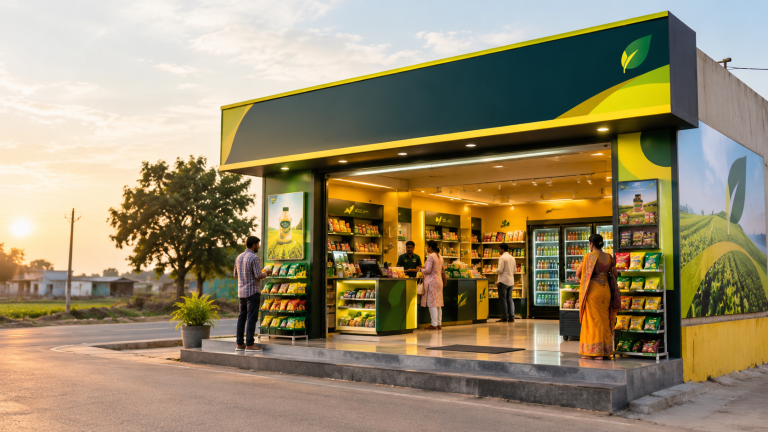
Shop branding is an effective offline marketing strategy that transforms ordinary retail spaces into recognizable brand touchpoints. From attractive shop boards and LED signage to product display racks and branded refrigerators, these solutions help businesses improve visibility, strengthen brand identity, and create a consistent customer experience.
At Fateh Rural, shop branding solutions help brands establish a strong presence across rural, semi-urban, and urban markets through customized signage, fabrication, and retail branding execution.
What Are Shop Branding Services?
Shop branding services involve designing, manufacturing, and installing branding materials at retail stores, dealer outlets, showrooms, and other commercial locations. The objective is to make a brand more visible, recognizable, and appealing to potential customers.
These services can be used by businesses launching new products, expanding into new markets, strengthening dealer networks, or running large-scale marketing campaigns.
Common shop branding solutions include:
Shop Boards: ACP boards, LED signs, and glow signs that improve storefront visibility.
Branding Gates: Customized entrance structures for dealerships, showrooms, warehouses, and promotional events.
Pole Boards: Roadside signage that helps customers identify nearby stores and dealers.
Product Racks: Branded display units that showcase products and improve shelf visibility.
Product Refrigerators: Branded cooling units for beverages, dairy products, and other temperature-sensitive products.
Shop Recce and Fabrication: Site surveys, measurements, customized design, production, and professional installation.
These solutions help businesses maintain a professional and consistent brand image across multiple retail locations.
Key Benefits of Shop Branding Services
1. Improves Brand Visibility
Attractive shop boards, LED signage, and pole boards help brands stand out in crowded marketplaces. They make it easier for customers to identify a store or recognize a product while travelling or shopping.
This is particularly useful in busy urban commercial areas, local markets, highways, and rural retail locations.
2. Builds Brand Recognition and Recall
Consistent branding across multiple stores helps customers become familiar with a brand. When people repeatedly encounter the same logo, colours, signage, and product displays, they have more opportunities to recognize and remember it.
Brand recall is especially valuable for FMCG, beverage, dairy, consumer electronics, and other frequently purchased products.
3. Creates a Professional Brand Image
Well-designed signage and organized product displays make a retail outlet look more professional. They can improve how customers perceive the quality, reliability, and credibility of a brand.
For businesses working with distributors and dealers, consistent shop branding also helps create a unified identity across the retail network.
4. Supports Product Discovery and Purchase Decisions
Branded racks, counter displays, and refrigerators help products stand out among competing options. Customers can locate products more easily and notice relevant product information or promotional offers.
Effective point-of-sale branding can support product consideration and encourage purchases, although actual sales results depend on factors such as pricing, availability, product quality, and customer demand.
5. Supports New Product Launches
When a company introduces a new product, customers may not immediately recognize or understand it. Shop branding helps communicate the product’s presence at retail outlets and supports awareness among potential buyers.
Combining branded displays with product demonstrations, sampling, and retailer engagement can make a launch campaign more effective.
6. Maintains Consistent Branding Across Locations
For companies operating through hundreds or thousands of outlets, maintaining a uniform brand identity can be challenging.
Standardized designs, materials, and installation processes help businesses create a consistent appearance across different cities, towns, and villages.
7. Offers Long-Term Brand Exposure
Unlike short-duration advertisements, durable shop boards and other permanent branding installations can provide ongoing visibility after installation. The actual lifespan depends on the material, environmental conditions, maintenance, and installation quality.
This makes shop branding a useful component of long-term retail marketing strategies.
Where Do Shop Branding Services Work Best?
Shop branding can be implemented in different environments depending on the target audience, product category, and marketing objectives.
1. Rural Markets and Villages
Rural retail branding helps brands establish visibility in village shops, agricultural input stores, local markets, and dealer outlets.
It is particularly relevant for agricultural products, fertilizers, seeds, farm equipment, FMCG products, and consumer goods.
For example, an agricultural brand can install branded boards at fertilizer dealers to improve product recognition among farmers visiting the store.
2. Semi-Urban Markets and Small Towns
Semi-urban locations provide opportunities for brands to expand beyond major cities while strengthening local retail distribution.
Shop boards, pole signage, and branded display units can help businesses improve visibility in local shopping streets, dealerships, and independent retail outlets.
3. Urban Retail Markets
In cities, shop branding works well in high-street stores, supermarkets, electronics outlets, convenience stores, beverage shops, and showrooms.
Eye-catching signage and organized product displays can help brands differentiate themselves in competitive retail environments.
4. Dealerships and Showrooms
Automobile dealerships, electronics showrooms, construction material dealers, and equipment retailers can use shop branding to create a professional customer-facing environment.
Branded entrance gates, fascia boards, display areas, and signage can reinforce brand identity and help customers identify authorized dealers.
5. Malls and Commercial Complexes
Retail brands can use display units, branded kiosks, directional signage, and promotional installations to attract attention in shopping malls and commercial spaces, subject to the venue’s permissions and branding guidelines.
6. Distributor and Dealer Networks
Businesses with large distribution networks can use standardized shop branding to strengthen their presence across multiple retail outlets.
This is particularly valuable when a company wants to expand into new territories or ensure that its products receive consistent visibility across different markets.
When Should a Business Invest in Shop Branding?
Shop branding is most useful when it is aligned with a clear business or marketing objective. The following situations are ideal opportunities to consider these services.
1. During a New Product Launch
A new product needs visibility and recognition. Installing branded boards, product racks, and promotional displays at selected retail outlets can support the launch and help customers discover the product.
2. When Entering a New Market
When a brand expands into a new city, town, or rural region, customers may have limited awareness of its products.
Shop branding helps establish a physical presence and supports other market-entry activities, such as distributor appointments, retailer meetings, and local promotions.
3. Before a Festive or Seasonal Campaign
Festive seasons and other high-demand periods can create opportunities for brands to increase retail visibility.
Businesses can refresh shop branding, highlight promotional offers, and improve product displays before periods of increased shopping activity.
For seasonal categories such as beverages, agricultural inputs, and consumer durables, campaign timing should match the relevant buying cycle.
4. When Competitors Have Strong Retail Visibility
If competing brands dominate shop boards, product displays, and storefront signage, a business may struggle to attract attention.
A planned shop branding campaign can help improve product visibility and strengthen the brand’s position within the retail environment.
5. When Expanding a Dealer or Retail Network
Businesses opening new outlets or onboarding additional dealers should consider shop branding as part of their expansion plan.
A standardized branding rollout helps maintain a consistent brand image while making participating outlets easier to identify.
6. When Rebranding an Existing Business
A brand refresh, new logo, updated packaging, or revised visual identity may require changes to existing shop boards and retail displays.
Updating these materials helps customers see a consistent identity across physical locations and other marketing channels.
7. When Launching an Integrated Marketing Campaign
Shop branding is particularly effective when combined with other promotional activities, including mobile van campaigns, in-store promotions, product sampling, retailer engagement, and digital advertising.
For example, a company can run a regional awareness campaign and ensure that the promoted product is clearly visible in participating stores. This connects marketing awareness with retail availability.
How Shop Branding Supports Marketing Campaigns
Shop branding should not be treated as an isolated installation activity. It can form an important part of a broader marketing campaign.
Step 1: Define the Campaign Objective
Identify the primary goal: brand awareness, product discovery, new-market entry, dealer visibility, product launch support, or improved retail presentation.
Clear objectives make it easier to choose suitable branding formats and measure campaign performance.
Step 2: Identify the Target Audience and Locations
Determine where the target customers shop and which retail outlets influence their purchasing decisions.
Depending on the campaign, locations may include urban supermarkets, local convenience stores, rural shops, agricultural dealers, showrooms, or distributor outlets.
Step 3: Select the Right Branding Formats
Choose suitable materials based on the location and campaign requirements.
For example, LED boards may suit prominent storefronts, pole boards may improve roadside visibility, and branded racks may be more appropriate for product-focused retail promotions.
Step 4: Maintain Consistent Brand Communication
Use approved brand colours, logos, messaging, and visual guidelines across all participating locations. Local-language adaptations can help make campaigns more relevant to regional audiences.
Step 5: Coordinate With Other Marketing Activities
Align shop branding with promotional offers, mobile van campaigns, product demonstrations, sampling activities, and digital advertising.
This helps customers encounter consistent messaging before, during, and after visiting a retail outlet.
Step 6: Monitor Execution and Measure Results
Check whether branding materials have been installed correctly, remain visible, and meet the campaign specifications.
Businesses can also track indicators such as outlet coverage, installation completion, display compliance, product availability, customer engagement, retailer feedback, and sales trends where reliable data is available.
Industries That Can Benefit From Shop Branding
Shop branding is suitable for a wide range of industries, including:
FMCG: Packaged foods, personal care, home care, and everyday consumer products.
Agriculture: Seeds, fertilizers, pesticides, farm equipment, and agricultural services.
Food and Beverages: Dairy products, bottled drinks, packaged snacks, and frozen foods.
Consumer Electronics: Mobile phones, home appliances, accessories, and electronic devices.
Automotive: Vehicle dealerships, spare parts, lubricants, and automobile accessories.
Pharmaceuticals and Healthcare: Eligible healthcare products and authorized retail outlets, subject to applicable advertising regulations.
Building Materials: Paints, cement, tiles, sanitaryware, and construction products.
Telecommunications: Mobile devices, telecom services, and authorized retail stores.
The most suitable branding format depends on the product, the retail environment, customer behaviour, and the campaign’s objectives.
Why Choose Fateh Rural for Shop Branding Services?
Planning a shop branding campaign requires more than attractive designs. Businesses need accurate site measurements, suitable materials, coordinated production, reliable installation, and consistent execution across locations.
Fateh Rural offers shop branding solutions designed to support retail visibility across rural, semi-urban, and urban markets.
Its shop branding services include:
Shop Recce and Survey: Site visits, measurements, and photographs to understand installation requirements.
Customized Design and Fabrication: Branding materials tailored to the outlet, brand guidelines, and campaign needs.
Multiple Branding Formats: Shop boards, branding gates, pole boards, product racks, and branded refrigerators.
Production and Installation: Coordinated manufacturing, logistics, and professional installation.
Quality Inspection: Final checks and photographic proof of completed installations.
Multi-Location Rollouts: Support for brands seeking consistent branding across multiple outlets in India.
With a structured execution process, businesses can plan shop branding according to their marketing timelines, retail expansion plans, and brand visibility objectives.
Conclusion
Shop branding services help businesses build a stronger physical presence where customers discover, evaluate, and purchase products. From rural markets and small towns to urban retail stores and large dealership networks, effective shop branding can improve visibility, reinforce brand recognition, and support integrated marketing campaigns.
The best time to invest in shop branding is when a business launches a product, enters a new market, expands its retail network, refreshes its brand identity, or prepares for a major promotional campaign.
By combining the right branding formats with suitable locations, consistent execution, and measurable campaign objectives, businesses can make their retail presence an effective part of their overall marketing strategy.
Looking to strengthen your brand’s retail presence? Explore Fateh Rural’s Shop Branding Services to plan customized branding solutions for your business across rural, semi-urban, and urban markets.
Frequently Asked Questions (FAQs)
1. What are shop branding services?
Shop branding services involve designing, producing, and installing signage, shop boards, product displays, and other branding materials at retail outlets to improve brand visibility and recognition.
2. What are the main benefits of shop branding?
The main benefits include better storefront visibility, stronger brand recall, a professional retail appearance, improved product discovery, and consistent branding across multiple locations.
3. Where can shop branding be used?
Shop branding can be used in village shops, local markets, supermarkets, showrooms, dealerships, malls, commercial complexes, and distributor or dealer outlets.
4. When should a business invest in shop branding?
Businesses should consider shop branding during product launches, market expansion, festive promotions, rebranding exercises, dealer-network expansion, and integrated marketing campaigns.
5. Which industries can use shop branding services?
Industries such as FMCG, agriculture, food and beverages, electronics, automotive, healthcare, telecommunications, and building materials can benefit from shop branding.
6. How does shop branding support marketing campaigns?
It reinforces campaign messaging at retail locations, helps customers identify promoted products, and connects brand awareness activities with the point of purchase.
7. What types of shop branding are available?
Common options include ACP boards, LED and glow signs, pole boards, branding gates, product racks, branded refrigerators, and customized retail displays.
8. Can shop branding be implemented across rural and urban markets?
Yes. Branding formats can be adapted to rural, semi-urban, and urban locations based on local conditions, target customers, outlet requirements, and campaign objectives.
9. How long does a shop branding campaign take?
The timeline depends on the number of outlets, design approvals, site surveys, production requirements, logistics, and installation complexity. Fateh Rural states that a typical rollout of 50–100 shops can take approximately 30–45 days after design approval and site survey completion.
10. How can businesses measure shop branding effectiveness?
Businesses can monitor outlet coverage, installation quality, display compliance, customer engagement, product availability, retailer feedback, and sales performance where reliable data is available.
11. Is shop branding useful for new product launches?
Yes. Branded displays and signage can improve product visibility at participating retail outlets and complement sampling, demonstrations, and other launch activities.
12. How can a business get started with shop branding services?
Start by defining your campaign goals, target locations, number of shops, preferred branding formats, and expected timeline. A site survey and branding proposal can then help determine the most suitable execution plan.